
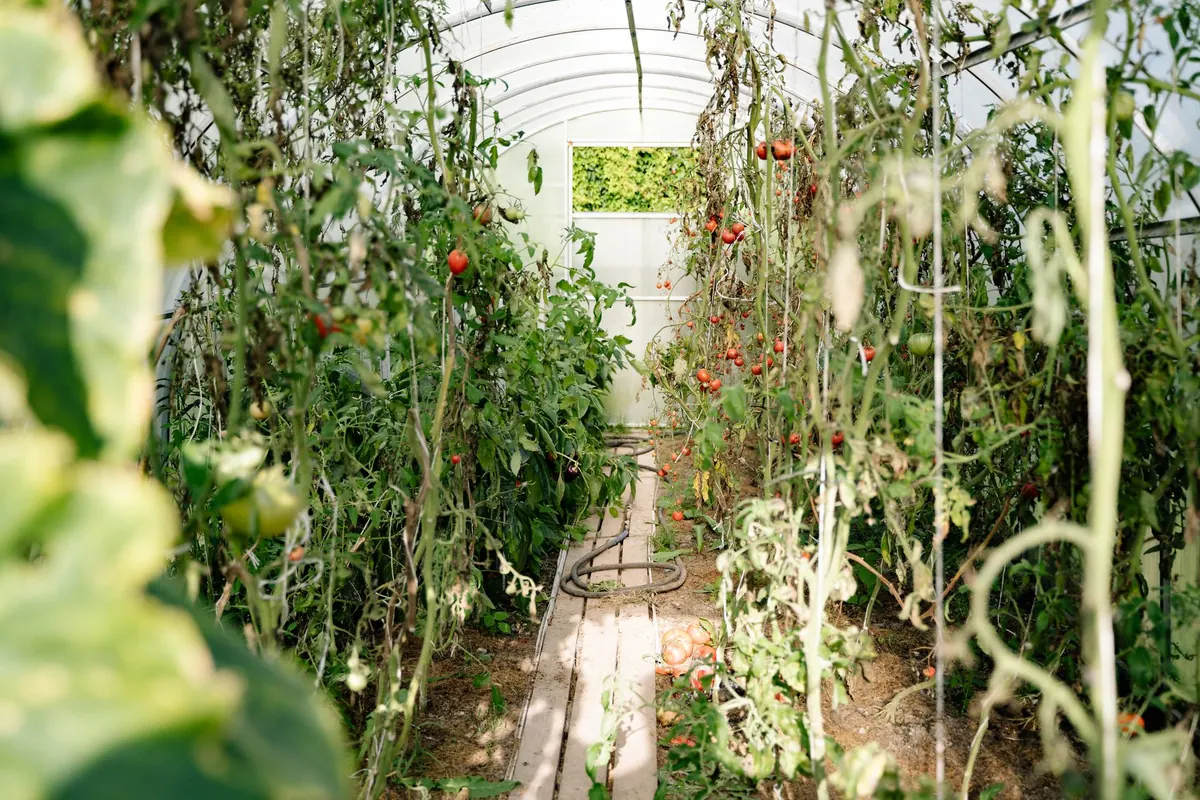
Tomatoes are the reason a lot of us wanted a greenhouse in the first place. Outdoors, even a decent summer can end in a heap of brown, collapsing foliage once blight arrives in August. Under glass the plants stay dry, the season starts earlier, and you can grow varieties that would never ripen in a wet British autumn. The catch is that a greenhouse is a small, still, humid world, and tomatoes dislike stagnation almost as much as they dislike cold. Get the routine right and you will be picking fruit from July into October.
February and March: sowing and starting off
Sow indoors or in a heated propagator from late February in the south, or early to mid-March if you are further north. Tomato seed needs warmth to germinate — around 18–21°C is ideal — so a windowsill above a radiator or a propagator on a kitchen worktop works well. Sow about 1cm deep in moist seed compost, keep the lid on, and expect seedlings in roughly a week to a fortnight.
As soon as the first true leaves appear, prick the seedlings out into 9cm pots. Bury the stem slightly deeper than it was growing; tomatoes will produce roots along the buried section, which makes for a sturdier plant. Move them somewhere bright and a little cooler, ideally 15–18°C. Warmth plus poor light gives you the classic leggy seedling that flops over before it has even been planted.
This is also the month to clean the greenhouse properly. Wash the glass inside and out, clear out dead plant debris, scrub old pots, and check that the vents open and close. Overwintering pests and disease hide in exactly the places you are about to fill with young plants.
Varieties worth space
- Cordon (indeterminate) types: 'Shirley', 'Moneymaker' and 'Gardener's Delight' are reliable croppers that suit greenhouse growing.
- Cherry tomatoes: 'Sungold' is sweet and heavy-yielding, and the small fruit ripen quickly even in a poor year.
- Blight-tolerant: 'Ferline' and 'Crimson Crush' are worth growing if you have had blight in the greenhouse before.
- Bush types: 'Tumbling Tom' in a hanging basket near the door saves bench space and gives you something to pick while you water.
April and May: planting out
Wait until night temperatures are holding above about 10°C — usually late April in the south, mid-May in colder spots. If your plants have been indoors, harden them off over a week by moving them to a cooler, sheltered spot for a few hours each day.
Plant deeply, up to the first set of leaves, into grow bags, large pots or the border soil. Give each cordon plant at least 10–12 litres of compost, and space them about 45cm apart so air can move between them. Fruit trusses will be lighter and the plant easier to manage if you space properly rather than cramming in extra plants.
Support at planting time, not later. A cane, a length of string from an overhead wire, or a spiral support all work; the string method suits tall cordons because you simply wind the growing stem around it each week. Water in well, then leave them alone for a few days to settle.
Once the first flowers open, help pollination by tapping each truss gently at midday or stroking it with a soft brush. Greenhouse tomatoes have no wind and few insects, so a little intervention makes a real difference to how many fruit set.
June to August: watering, feeding and training
This is where the crop is won or lost. Tomatoes want consistent moisture, not a weekly flood followed by dust.
- Water little and often, at the base, in the morning. Irregular watering is the usual cause of split fruit and blossom end rot.
- Start feeding when the first truss has set fruit, using a high-potash tomato feed weekly. Move to twice weekly once four or five trusses are carrying fruit.
- Remove sideshoots weekly — the little shoots growing in the angle between leaf and stem. Pinch them out while they are small enough to snap with a thumbnail.
- Ventilate daily. Open vents mid-morning and close them mid-afternoon to hold the warmth overnight. Damp down the path, not the foliage, on very hot days.
- Shade the glass from late June with netting or a shading wash if the house regularly tops 30°C.
- Strip lower leaves below the first truss once that fruit has set, to improve airflow and make watering easier.
Blight, mould and other problems
Blight is airborne, arriving on warm, humid spells, and it moves fast once it starts. The best defences are a dry canopy and moving air: never water over the leaves in the evening, keep plants well spaced, and remove any suspicious brown patches of leaf straight away — into a bag and the bin, not the compost heap. Blight-resistant varieties help but are not a guarantee.
Grey mould (botrytis) likes cool, damp, stagnant conditions and often enters through damaged stems and old flowers. Keep the house tidy, avoid overcrowding, and cut out affected growth promptly. Whitefly and aphids are the usual greenhouse visitors; yellow sticky traps catch the adults and give you an early warning, and it is worth checking the undersides of leaves once a week.
September and October: ripening and the final pick
Ripening works up the plant, so you will be picking from the lower trusses first. In late August or early September, pinch out the growing tip two leaves above the top truss. This stops the plant making more flowers and pushes its energy into ripening what is already there.
As the light fades, reduce watering and remove any leaves shading the fruit. At the end of the season, green tomatoes will ripen indoors on a sunny windowsill, particularly if you put them with a ripe banana. Anything that refuses to colour is perfectly good for chutney, roasting or frying.
Your tomato routine at a glance
Sow late February to mid-March. Prick out at the first true leaves. Plant out once nights stay above 10°C. Tap the trusses to pollinate. Water little and often from planting, feed from the first set truss, sideshoot weekly, ventilate daily. Stop the plants in early September. Pick, eat, and repeat. Keep a notebook of what you grew and when the first fruit ripened — a greenhouse is a small, particular climate, and your own records are worth more than any general rule.
Photo: Yan Krukau / Pexels
Related posts
More stories you’ll love reading