
Rose pruning has a reputation for being fussy and technical, usually delivered alongside a diagram of a bud eye and a firm warning about the wrong sort of cut. In practice, roses are among the more forgiving plants in a British garden. Get the timing roughly right, cut cleanly, feed afterwards, and they will do most of the work themselves. The disappointing results people complain about — a climber that flowers only at the top, a shrub that turns into a thicket of twig, a repeat-flowerer that stops repeating — nearly always trace back to a handful of habits. Each one is easy to break.
Timing: the mistake that costs the most flowers
Roses fall into two rough groups, and they are pruned at opposite ends of the year. Getting this the wrong way round is the single most common reason for a summer without flowers.
Repeat-flowering roses — bush roses, hybrid teas, floribundas, patio roses, most modern shrub roses and repeat-flowering climbers — flower on growth made in the same season. Prune them in late winter, roughly from late February to mid-March, once the worst of the frost has passed and the buds are just beginning to swell. That timing gives the plant a full season to build flowering wood.
Once-flowering roses — ramblers such as Rambling Rector or Wedding Day, and old garden roses like gallicas and centifolias — flower on wood made the previous year. Prune these straight after they finish flowering, usually in July or August. Cut them in winter and you remove the very stems that would have carried next year's blooms. You will get a healthy, leafy rose and very little else.
Two smaller timing traps are worth knowing. Don't prune in autumn to "tidy up"; the wounds sit open through winter and any soft regrowth is killed by the first hard frost. And don't leave it so late in spring that the new shoots are already several centimetres long — you will knock them off as you work. A dry, mild day in late winter is ideal.
The cut itself: five seconds of detail that decides the outcome
Work in a sensible order rather than attacking the shape first:
- Take out dead, damaged and diseased wood, cutting back into healthy pale-cream wood until you reach clean tissue.
- Remove stems that cross and rub, and any thin, spindly growth from the centre.
- Cut out the oldest, thickest stems at the base — these are the ones that have stopped earning their keep.
- Only then shorten what remains, cutting to a bud that points outwards.
A good cut sits about 5mm above a bud and slopes gently away from it, so water runs off rather than collecting. Cut too close and the bud dies; leave too long a stub and it blackens and dies back. Use sharp bypass secateurs rather than anvil types, which crush. On stems thicker than your thumb, reach for loppers or a pruning saw instead of forcing the secateurs.
One habit worth dropping: sealing cuts with wound paint. Roses cope perfectly well without it, and the sealant traps moisture and can encourage problems.
Shrub roses: don't be timid, but don't be uniform either
Bush roses respond well to a firm hand. A rough guide is to leave them somewhere between 20cm and 40cm tall, with vigorous varieties left taller and weaker growers cut harder. Aim for an open, goblet-shaped framework of strong stems with air moving through the middle — that airflow is your best defence against blackspot later in the year.
Repeat-flowering shrub roses such as The Fairy or Bonica are different. Cutting these to the ground each spring throws away the established structure and often gives you a season of leaves. Instead, remove a quarter to a third of the oldest stems right down to the base each year, shorten the remaining growth lightly, and let the plant renew itself gradually.
Watch out for the "knuckle" problem, too. If you cut back to exactly the same point year after year, you build up a congested cluster of stubby shoots that produces small flowers and poor air circulation. Vary the height of your cuts and, every few years, take an old stem out entirely and let a new one come from the base.
Climbers and ramblers: bend them, don't just top them
The classic climbing rose mistake is trimming the top each spring, which produces a bare wall with a thatch of flowers at head height. Roses flower most freely where stems are bent towards horizontal, because the sap runs more slowly along a curved stem and buds along its length are triggered into growth.
So build a permanent framework instead. Choose three to five strong main stems, tie them in on a fan, an arch or sweeping diagonally across the wall, and cut the side shoots that come off them back to two or three buds. Train new shoots in as the old ones age, and remove one of the oldest main stems each year or two, replacing it with a young one tied in low down. Ramblers need less of this: after flowering, cut out some of the oldest stems at the base and tie in the long new growth they produced over summer.
Deadheading and aftercare: what happens next
Repeat-flowering roses keep going only if you keep picking. Deadhead by cutting back to a strong leaf with five leaflets, just above an outward-facing bud. Short snips to a three-leaflet leaf produce weak, twiggy regrowth. From late August, ease off and leave the last flowers to set hips — the plant hardens up for winter, and the birds get a feed.
After pruning, a few simple jobs make the difference between surviving and thriving:
- Feed with a rose fertiliser as the buds break in spring, then again after the first flush of flowers.
- Mulch with 5–8cm of well-rotted manure or compost, kept clear of the stem itself.
- Water thoroughly in dry spells, especially newly planted climbers, which need help for their first two summers.
- Bin or green-waste diseased prunings rather than composting them, and wipe your blades between roses if blackspot or dieback is about.
- A late-summer feed high in potassium — tomato feed works well — helps firm the growth before winter.
A routine you can pin to the shed wall
Late winter: prune repeat-flowering bush roses and repeat-flowering climbers, cutting out dead and crossing stems first, then shortening to outward-facing buds and feeding. Late summer, after flowering: prune once-flowering ramblers and old garden roses, cutting out the oldest stems and tying in new growth. Through the season: deadhead to a five-leaflet leaf until late August. Then mulch, water, and leave the hips for the birds.
Prune a little too hard or a little too soft and a rose will still forgive you. Prune at the wrong time of year, or shear the top of a climber and leave it at that, and you will wait a long time for a decent display. Get the timing and the framework right, and everything else follows.
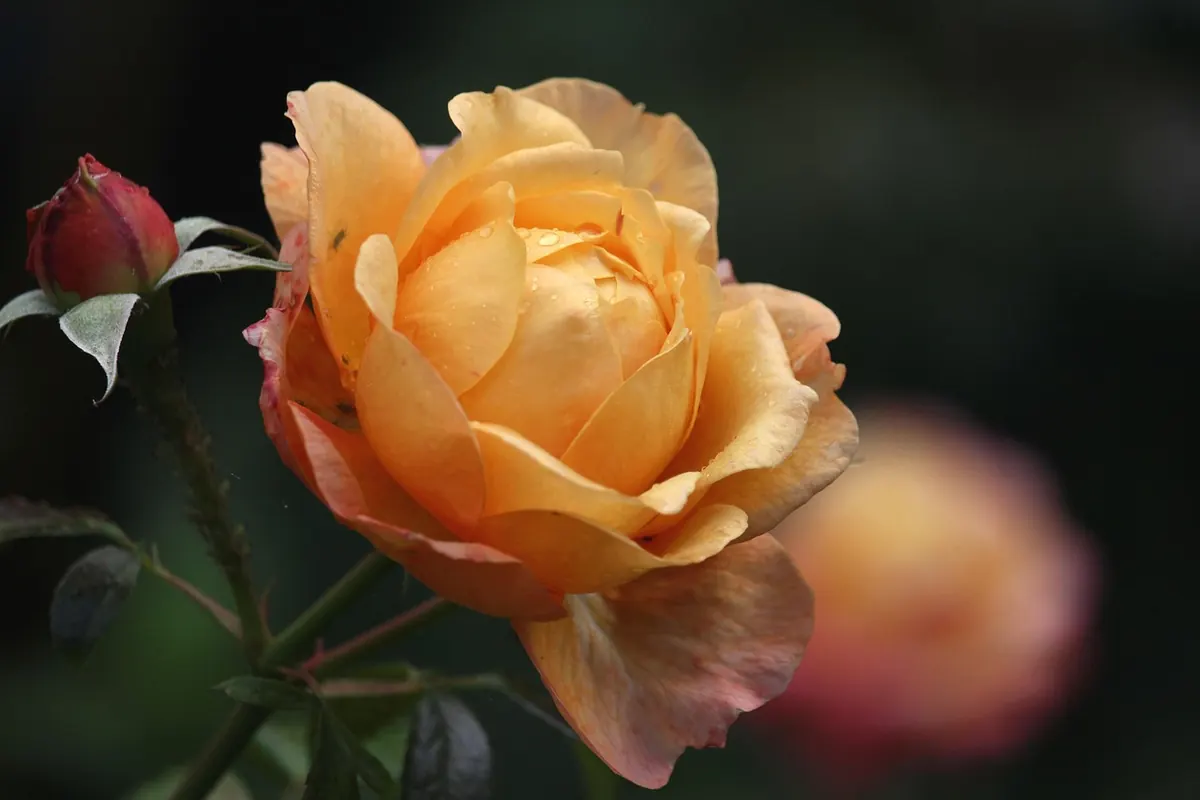
Photo: KRiemer / Pixabay
Related posts
More stories you’ll love reading